Part II A Computational Framework for Dreams
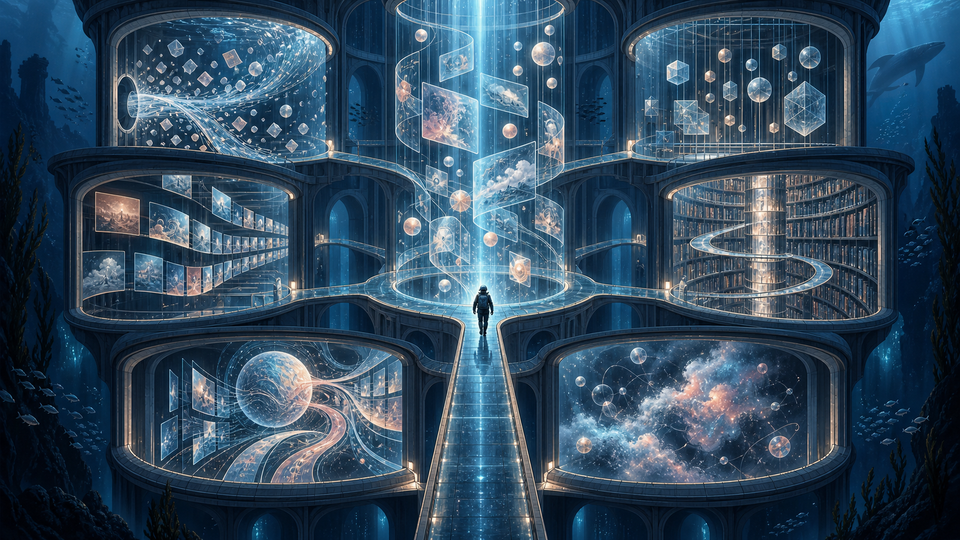
If dreams are to become part of the future of human intelligence, they must first become computational objects.
Today, dreams are typically treated as narratives: fragmented memories written in journals or spoken aloud after waking. While valuable, narrative alone limits what dreams can become. Stories are difficult to compare, impossible to quantify consistently, and challenging to integrate with physiological signals or artificial intelligence.
A computational framework begins with a different assumption.
Rather than asking What does this dream mean?, we ask:
How can a dream be represented as structured information?
Every dream contains multiple layers of information operating simultaneously.
The narrative sequence describes events.
The visual layer contains scenes, objects, and spatial relationships.
The emotional layer reflects affective intensity and transitions.
The symbolic layer connects recurring motifs across time.
The physiological layer relates dreams to sleep stages, brain activity, heart-rate variability, respiration, and other biometric signals.
Finally, the cognitive layer captures memory consolidation, imagination, prediction, creativity, and self-modeling.
Instead of collapsing these dimensions into a single interpretation, Dream Intelligence treats them as complementary representations of the same cognitive process.
From this perspective, a dream becomes a multimodal cognitive dataset.
Large language models organize narrative structure.
Vision models reconstruct imagery.
Speech models enable natural dialogue with dream memories.
Wearable devices provide physiological context.
Knowledge graphs connect recurring symbols and concepts across months or years.
Together, these representations allow dreams to become searchable, comparable, and continuously learnable.
The purpose is not to reduce dreams to numbers.
It is to create computational representations that preserve their richness while enabling entirely new forms of exploration.
Ultimately, Dream Intelligence seeks to transform dreams from isolated memories into longitudinal cognitive data—data that can help us better understand creativity, emotional adaptation, learning, and the evolving architecture of the human mind.
Member discussion